
BRUSSELS, BELGIUM
13-15 JANUARY 2026

Policymakers: time to make a change in Brussels!
VOICES’ fourth event is bringings learned lessons to the action table…
A delegation of local authorities from the Calabria Region (Italy), policymakers, civil society representatives, and international students are coming together for the first time to make a real impact in the lives of migrants in the south of Italy. In three fully packed days, the dynamic and diverse coalition is joining forces for the co-creation of a historical Local Action Plan Against Racism and for Integration.
60
PARTICIPANTS
17
POLICYMAKERS
1
AUDIOVISUAL EXHIBITION

THE MISSION
Taking place in Brussels from 13 to 15 January 2026, the VOICES High-Level Summit brings together local and European policymakers, EU officials, civil society actors, international students, and migrant representatives with a shared purpose: to challenge racism and discrimination.
Building on testimonies and policy recommendations gathered through previous VOICES events, the Summit is creating a space for meaningful exchange and collaboration, turning lived experiences into concrete and actionable integration policies.

An audiovisual exhibition will complete the experience, inviting participants to immerse themselves in a town that transformed itself by putting integration and hospitality first, and whose involvement in VOICES’ cannot be understated: Rosarno, capital of integration!
EXHIBITION
Rosarno, Capital of Integration:
VOICES from Migrations for European Inclusive Policies

Calabria is a land shaped by movement, hope, and humanity. Deeply influenced by centuries of migration, it stands out as a region of rich cultural diversity and a key reference point in the history of European migration. At its heart lies Rosarno: a town where migrants and local residents are working side by side to build a new model of community, grounded in dignity, coexistence, and shared futures.
Opening at the European Parliament on 13 January, the exhibition Rosarno, Capital of Integration invites visitors into this local reality and its broader regional context. Through a carefully curated visual and narrative journey, the exhibition explores Rosarno’s history, landscapes, and social fabric, placing people and their lived experiences at the centre of the story.


.png)

Featuring works by photographers Alessandro Mallamaci and Fabrio Itri, alongside evocative images, videos, and written testimonies captured during the second “VOICES From Migrations” event at the local “Village of Solidarity”, the exhibition is a groundbreaking initiative that comes to prove the importance of integration projects and of addressing communities directly in the face of adversity.
Member of the European Parliament, Giusi Princi (EPP), a champion of the project’s values and of the Calabria Region, proudly hosts the exhibition’s inauguration. In her words:
“Rosarno is a pioneer of a unique European model of integration and inclusion. ‘United in diversity’, they foster understanding, mutual respect, and coexistence among peoples.”
*Participation to the exhibition possible only upon invitation.

Emmanuel Osei, Giovanni Arruzzolo, Maria Stefania Caracciolo, and Pasquale Cutrì (2025)
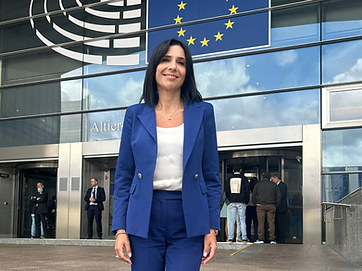
MEP, Giusi Princi

VENUES
19:00 - 19:30: ASP 5th floor - Balcony Area 5G
Address:
Rue Wiertz 60, 1047 Bruxelles
European Committee of the Regions
Room JDE 51
Address:
Batiment Jacques Delors, Rue Belliard 99/101, 1040 Bruxelles

CHECK THE RESULTS

High-Level Summit on Anti-Racism and Integration Strategies for Local Policymakers


