VOICES Returns to European High Schools and Institutions
A new round of Europe Day events brought stories, dialogue, and intercultural exchange to classrooms in Greece, Italy, and Belgium
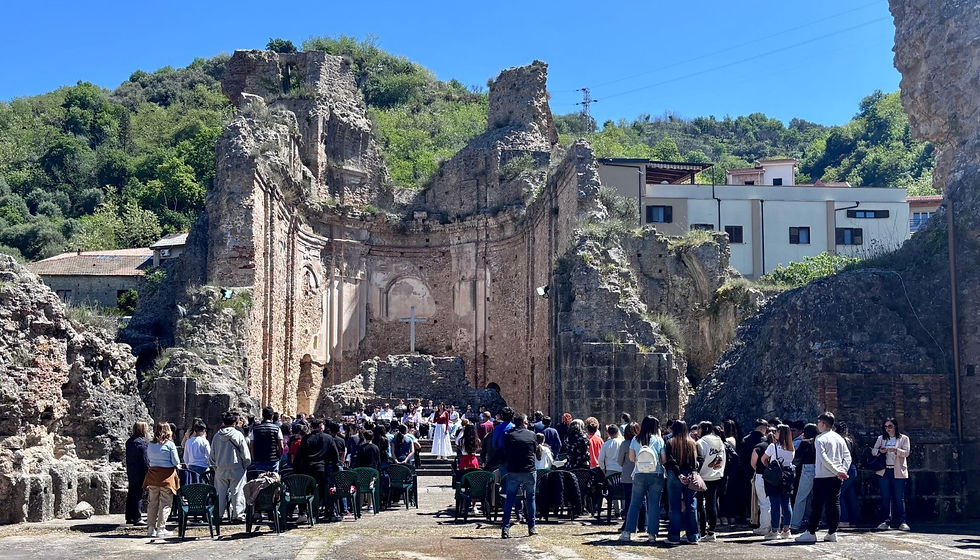
June 2026: What happens when migration is discussed not through statistics and headlines, but through personal stories and real-life experiences?
This Europe Day, students across Greece, Italy, and Belgium had the opportunity to find out. Through a new series of dissemination events, VOICES From Migrations returned to schools and educational institutions, inviting young people to engage with migration, inclusion, and active citizenship in a meaningful and interactive way.
Building on the success of previous editions, the initiative once again placed students at the centre of the conversation. Through direct encounters with migrants, documentary screenings, and debates, participants were once again encouraged to look beyond stereotypes and explore the human experiences behind migration.
The events also brought together educators, local authorities, cultural institutions, and migrant citizens, creating spaces where different perspectives could meet and dialogue could flourish.
HIGHLIGHTS
Among the most engaging moments were the Living Library sessions, where guest speakers shared their migration journeys directly with students, creating opportunities for meaningful dialogue and personal reflection. Participants also watched VOICES Rewind, a short documentary highlighting key testimonies and milestones from the project, and, in Italy, explored the VOICES Audiovisual Exhibition.
Together, these activities showcased the project's main achievements, including the collection of 70 migration stories, the development of three policy recommendations, and the creation of a Local Action Plan Against Racism and for Integration.
Held across Italy, Greece, and Belgium, the events brought together 305 participants. Activities were delivered in English as well as in the local languages of the host schools, ensuring accessibility and active participation in each country.
While each event reflected its local context, they all shared a common objective: showcasing the outcomes of the VOICES project and encouraging participants to reflect on how individuals and communities can contribute to building more inclusive societies across Europe.

A student watches the VOICES documentary projection during the Dissemination Event in Belgium.

Secondary students at Perrotis College watch the documentary projection. Dissemination Event in Greece.
A TRANSNATIONAL SPACE FOR LEARNING
The Europe Day events were the result of months of collaboration between project partners, schools, and local stakeholders.
In Greece, the project continued its cooperation with Perrotis College of the American Farm School. In Italy, Istituto Comprensivo Statale “G. D'Antone” Acquaro-Soriano partnered with the Museum of Soriano Calabro, where the 52-panel VOICES Audiovisual Exhibition was displayed after being transported from Brussels. In Belgium, the European Institute for Arabic Culture hosted the final event, helping to engage a broader and more diverse audience.
Together, the three events created a transnational space for learning, dialogue, and reflection on migration, inclusion, and European values.
More than a dissemination activity, these events demonstrated the power of education, culture, and community engagement to bring people together. They showed how personal stories can spark empathy, encourage critical thinking, and create opportunities for meaningful conversations about some of the most important challenges facing European societies today.
As VOICES From Migrations continues to share stories and foster dialogue, one message remains clear: understanding begins when we take the time to listen.
Learn more about VOICES From Migrations here.

Co-funded by the European Union. Views and opinions expressed are however those of the author(s) only and do not necessarily reflect those of the European Union or the European Education and Culture Executive Agency (EACEA). Neither the European Union nor EACEA can be held responsible for them.


Comments